
Back to Journals » Clinical Ophthalmology » Volume 20

A Historical Review of Encircling Laser Retinopexy as a Prophylaxis for Rhegmatogenous Retinal Detachment; and a Commentary on Recent Progress in Stickler Syndrome
Authors Morris RE  , Kuhn F, Oltmanns MH , West MR, Baxter CR, Sapp MR, Chawla H
Received 13 December 2025
Accepted for publication 24 March 2026
Published 19 April 2026 Volume 2026:20 588688
DOI https://doi.org/10.2147/OPTH.S588688
Checked for plagiarism Yes
Review by Single anonymous peer review
Peer reviewer comments 2
Editor who approved publication: Dr Yousef Fouad
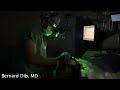
Supplementary video of “Encircling Laser Prophylaxis for Retinal Detachment” [588688].
Views: 40
Robert E Morris,1– 3 Ferenc Kuhn,1,4 Matthew H Oltmanns,1– 3 Matthew R West,1– 3 Cary R Baxter,1– 3 Mathew R Sapp,1– 3 Harshvardhan Chawla1– 3
1Helen Keller Eye Research Foundation, Birmingham, AL, USA; 2Retina Specialists of Alabama, Birmingham, AL, USA; 3Department of Ophthalmology, University of Alabama at Birmingham, Birmingham, AL, USA; 4Department of Ophthalmology, University of Pécs Medical School, Pécs, Hungary
Correspondence: Robert E Morris, Helen Keller Eye Research Foundation, 2208 University Blvd, Suite 101, Birmingham, AL, 35233, USA, Tel +1 659 297 5577, Email [email protected]
Abstract: Rhegmatogenous retinal detachment (RD) is typically caused by retinal tears anterior to the equator, usually occurring in normal appearing retina. We here review the chronological history of encircling (360-degree) laser retinopexy to the peripheral retina as a stand-alone prophylaxis for retinal tears in asymptomatic eyes determined to be at high risk. We describe recent strong proof that such encircling prophylaxis prevents RD in Stickler syndrome, the highest risk predisposing condition known. Finally, we note that peripheral vitreous traction tears are the common pathogenesis of RD in both syndromic and non-syndromic eyes, so that such prevention may ultimately prove effectual in eyes determined to be at high risk in both.
Plain Language Summary: In a rare, childhood disease called Stickler syndrome, noninvasive laser prevention of retinal detachment (RD) has recently been proven to be safe and effective. Such 360-degree laser treatment will likely be eventually proven to also prevent RD’s that more commonly occur in the course of normal aging.
Keywords: encircling laser prevention, retinal detachment prevention, 360-degree laser prophylaxis, ora secunda cerclage, OSC, Stickler syndrome, OSC/SS
Retinal Detachment Prevention
As aging eyes develop lens opacities (cataract) millions who are affected finally have a simple and elegant solution – elective lens replacement with an artificial intraocular lens (IOL). But when movements of aging vitreous gel behind an IOL lead to rhegmatogenous retinal detachment (retinal detachment, RD, Figure 1), urgent surgery is the last chance before blindness.
 |
Figure 1 Aging vitreous gel has torn the peripheral retina, allowing aqueous fluid to enter the potential subretinal space, causing a retinal detachment (Image used with permission of Stephen Gordon). |
Although RD is usually repairable, preventing retinal tears and detachments is a better sight-saving solution. Fortunately, causative vitreous traction tears typically occur in the peripheral retina that can be laser “welded” to the underlying choroid (retinopexy) as a preventive procedure with little or no noticeable disturbance in vision.
Laser Retinopexy: The Beginning
Laser retinopexy was introduced circa 1970 to focally treat visible lesions in the retinal periphery predisposing to RD, such as retinal tears and lattice degeneration (Figure 2).1,2 Laboratory experiments at that time demonstrated that laser retinopexy strengthened the retina against tears from vitreous traction 3 to 5-fold versus untreated retina, with maximum strength achieved approximately one month after treatment.3
 |
Figure 2 Focal laser retinopexy two months after treatment of a pigmented lattice degeneration lesion (Image used with permission of Retina Specialists of Alabama, |
These peripheral predisposing lesions were typically discovered by indirect ophthalmoscopy, providing a wide field of view, stereopsis, and dynamic scleral depression. But actual treatment with lasers was only possible through a contact lens at a slit lamp, with none of these advantages.
Focal retinopexy of retinal defects, although logical and often performed, has been unequivocally endorsed by the American Academy of Ophthalmology (AAO) only for “horseshoe” tears associated with symptomatic posterior vitreous detachment (PVD), because,
A primary limitation of (focal) prophylactic therapy (in asymptomatic eyes) is that causative breaks leading to RD often occur during PVD in areas that appear normal prior to the PVD.4(Figure 3)
In fact, Byer noted that 70% of retinal tears after PVD occur in apparently normal retinal areas: and that 89% of detachments in untreated eyes with two or more risk factors (impending PVD, fellow eye status, lattice degeneration, asymptomatic defects, myopia, pseudophakia, family RD history) arise from such “normal” appearing areas (“if we cannot predict the danger sites, we cannot prevent detachment”).5
 |
Figure 3 RD caused by a new tear in normal appearing retina,4,5 even after prior focal treatment of a preexisting tear elsewhere (Image used with permission of Stephen Gordon). |
The mainstream of ophthalmology followed along the path of Byer who counseled restraint in focal treatment of asymptomatic lesions, even those known to be predisposing in fellow eyes.6 However, during the early years of laser retinopexy, a few determined ophthalmologists continued focal treatment of predisposing lesions in asymptomatic fellow eyes and supplemented it with an encircling grid of laser retinopexy to the normal appearing peripheral retina elsewhere.7,8
Additionally, Pollack et al employed encircling laser retinopexy at the equator for high-risk eyes with inherited predispositions
It is possible that the boundary of laser burns at the border of pathological and normal retina, produced by the application of laser photocoagulation 360 degrees around the peripheral retina, acts like a new posterior ora serrata.9
Through the small mirror of a contact lens, there was limited ability to effectively treat the entire retinal periphery, leading to inconsistent prophylaxis outcomes. Pollack even described having a child under general endotracheal anesthesia held sitting at a slit lamp while encircling laser treatment was performed with a contact lens. In fact, many such efforts simply created a “fence” near the equator to “delimit” retinal detachments still occurring anteriorly.9 But detachments developing more anteriorly could still breach skip areas in treatment, or cause new tears in retinopexy, and extend posteriorly (Figure 4a and Figure 4b).
 |
Figure 4 (a) Laser “fence” (Image used with permission of Retina Specialists of Alabama, |
Because little distinction was made between its concept and its execution, encircling laser prophylaxis was thereafter widely regarded as a failure.10 This hindered its adoption for years, even after implementation limitations were overcome with indirect ophthalmoscope laser delivery. In fact, it would take thirty more years before the AAO endorsed “360-degree” laser prophylaxis, and then only for a single predisposing condition.4
Indirect Ophthalmoscope (IDO) Laser Delivery Makes Its Appearance
IDO laser delivery became clinically available circa 1995,11 enabling reliable 360-degree (encircling or cerclage) grid laser to the entire peripheral retina, extending to the ora serrata, if an eye was determined to be high-risk (Video S1). Laser “welding” of the peripheral retina to the underlying choroid (retinopexy) could then more likely prevent causative tears in normal appearing peripheral retina when PVD eventually occurred (Figure 3).3,4
It is our intention here to offer a comprehensive chronology of encircling laser prophylaxis development as a stand-alone procedure, from our perspective of early and persistent proponents, developing proof of safety and efficacy over decades based on our experience. The determination of which eyes are at sufficiently high risk to justify encircling prophylaxis is each physician’s responsibility, each informed patient’s choice, and is an ongoing process.
When encircling laser prophylaxis is performed, the ideal position for the posterior edge of treatment is between the posterior vitreous base (which rarely extends more than 3 mm posterior to the ora serrata)12 and the vortex vein (VV) ampullae (whose anterior edge approximates the equator, averaging 7.6 mm posterior to the ora serrata).13 We have demonstrated that, when necessary, tight grid retinopexy can be extended posteriorly to and between the VV ampullae without noticeable reduction in the visual field.14 The VV ampullae themselves and the long ciliary nerves at 3 and 9 o’clock should be carefully avoided to preserve optimal choroidal circulation and anterior segment innervation.15,16
But which eyes are at high risk, and how high a risk do they harbor? Without these answers no clinical trials of either focal or encircling laser prophylaxis were developed, although prospective trials were frequently called for in the prophylaxis literature.6 And absent prospective clinical trials, it was understandable that encircling laser prophylaxis was only occasionally mentioned in the literature, and rarely performed, except in conjunction with vitrectomy surgery to prevent RD recurrence. When it was reported as a stand-alone prophylaxis, it was always in an effort to prevent retinal detachment in fellow eyes.17–19
Creating a “Second Ora” to Protect the Central Retina in High-Risk Eyes: A Chronology
In the July 1998 issue of EyeWorld, a publication of the American Society of Cataract and Refractive Surgery (ASCRS), we published, “A New Treatment for the Prevention of Retinal Detachment,” as the featured article, describing for the first time a method of “Laser Cerclage” with Indirect Ophthalmoscope (IDO) delivery to prevent retinal tears in the normal appearing peripheral retina of eyes judged to be at high risk for RD.20
In 2002, at the first annual meeting of the American Society of Retina Specialists (San Francisco), Morris et al reported a concept of using encircling laser retinopexy as a pure prophylaxis in high-risk eyes, independent of vitrectomy, to produce a “second ora” or “ora secunda” (ora secunda cerclage, OSC), posterior to the vitreous base but anterior to the equator Rather than Pollack’s concept of producing a “second ora serrata” at the boundary between “pathological” and normal retina, to “delimit” retinal detachments occurring anteriorly,9 IDO laser grid retinopexy would thus bond all high-risk peripheral retina anteriorly, taking it completely “off the playing field” (Figure 5). In our experience, such OSC treatment prevents both retinal detachments and the retinal tears that cause them in properly treated peripheral retina.
 |
Figure 5 Illustration of OSC. Laser burns of moderate intensity are placed in a grid pattern (one to two spot widths separation) extending from the ora serrata approximately 5 mm posteriorly, in effect producing a “second ora” posterior to the vitreous base (Image used with permission of Stephen Gordon). |
In 2008, OSC was the invited Cover Story in Retina Today (Figure 5).17 Fellow eyes of bilaterally pseudophakic patients who otherwise were reported to have a 26% chance of developing a second retinal detachment were analyzed.21 Fellow eyes with lattice or breaks were offered a choice of observation, focal prophylaxis, or OSC encircling prophylaxis. Fellow eyes with no lesion were observed, unless the primary eye had lost macular function, in which case OSC or observation were offered.
Eyes observed or treated with focal laser retinopexy suffered a 19.4% RD rate, whereas OSC-treated eyes had a 1.4% RD rate with average follow-up of five years (p<0.001). However, in the pre-OCT era, when the diagnosis of PVD was less certain and less easily documented, this study did not analyze PVD status and did not proceed to a prospective trial.
In 2016, Ripandelli et al reported using 360-degree laser prophylaxis in fellow eyes of patients who had suffered spontaneous retinal detachment from a giant retinal tear (GRT) in the primary eye Untreated fellow eyes had a GRT detachment rate of 14.5%, while fellow eyes treated with encircling laser prophylaxis had a 2% GRT detachment rate (p<0.001).18
In 2020, Verhoekx et al reported that patients with a GRT primary RD suffered a fellow eye RD rate (from any size defect) of 43% when observed, whereas only 12.8% of such fellow eyes treated with laser cerclage detached (p<0.001).19
In 2023, Morris et al published “Preventing Retinal Detachment: The Encircling Laser Retinopexy Technique,” describing in great detail the OSC method for performing encircling laser treatment.22 This extensively illustrated article included a supplemental review of all encircling laser articles published to date, the majority describing treatment during vitrectomy to prevent recurrent retinal detachment. This was the first literature description, beyond a sentence or two describing number/location of treatment “rows,” of a detailed methodology and protocol for encircling laser prophylaxis.
In December 2024, Kuhn and Morris published an editorial describing a proactive stance regarding informed consent, in which patients at high risk of fellow eye RD are fully informed regarding all available options – observation, focal laser retinopexy, or encircling laser prophylaxis.23
Stickler Syndrome: Learning From the Children - Progress Quickens
In 2012, Morris began systematically offering “OSC/SS,” extending OSC encircling laser prophylaxis more posteriorly for patients with Stickler syndrome (SS) who were definitively identifiable by genetic testing, or by family history, myopia, vitreous phenotyping, and retinal examination - and who otherwise had up to a 65% lifetime risk of RD.24
Half of SS detachments occur by age 20, with up to 80% being bilateral at a median of 4 years.25 Because of giant tears, multiple posterior tears, young age at onset, aberrant vitreous traction, and proliferative vitreoretinopathy, SS retinal detachments are especially difficult to repair. Consequently, there is often a strong family history of vision loss or blindness at an early age in this dominantly inherited disease.26 The fundamental problem in Stickler eyes is that the vitreous cavity is only partially filled with gel vitreous at birth (optically empty). The central vitreous does not “liquify” - it never forms.27
In non-syndromic aging eyes, acute posterior vitreous detachment is “the protagonist in the drama of retinal detachment.”28 Not so in Stickler syndrome, because movements of the hypoplastic vitreous gel often give rise to retinal tears completely independently of posterior vitreous detachment (Video S2), even during childhood and adolescence, when normal eyes with a completely gel-filled vitreous cavity are impervious to such an occurrence.29 And aqueous fluid is ready to breach any retinal tear that develops.
In fact, less than half of Stickler RD’s have posterior vitreous detachment.29 Moreover, the vitreous gel that is present adheres to the retina in an anomalous, unpredictable fashion, frequently causing multiple posterior tears that justify the use of silicone oil as a prophylaxis against proliferative vitreoretinopathy in the repair of any resultant retinal detachment (Video S2).29,30 Lattice degeneration and radial perivascular retinal degeneration with strong foci of vitreous adherence can extend quite posteriorly, sometimes requiring posterior focal retinopexy prophylaxis beyond anterior encirclement (Figure 6).31 Since the vitreous base extends posterior to the ora serrata only with advancing age,12 anterior traction events give rise to giant retinal tears at the ora serrata in over 40% of SS retinal detachments (Figure 7).25,32
 |
Figure 6 Radial perivascular retinal degeneration pathognomonic of SS (Used with permission of Retina Specialists of Alabama, |
 |
Figure 7 Image of giant retinal tear LE from 1 o’clock to 9 o’clock (Used with permission of Retina Specialists of Alabama, |
In 2021, Morris et al published “Stickler Syndrome: Laser Prophylaxis for Retinal Detachment” describing an extension of OSC (OSC/SS) that prevented RD in the fellow eyes of three SS family members (and in both eyes of another affected male) genetically verified as type 2, who had lost vision in the primary eye (Video S3)14 Affected members not treated developed RD at a rate of 83% in this family.
OSC/SS protocol treatment begins 2 mm onto the pars plana, to cover the anterior vitreous base, preventing giant retinal tears at the ora, and emulating the standardized, long-term, encircling cryopexy prophylaxis reported by the Cambridge retina group.25 It also extends posteriorly to and between the vortex vein ampullae to prevent the multiple, smaller posterior tears also commonly seen in SS (Figure 8).24 Importantly, burns are of slightly increased intensity and a tighter grid pattern is used, relative to standard OSC, to effectively prevent GRT.
 |
Figure 8 Ora Secunda Cerclage/Stickler Syndrome (OSC/SS). A grid of laser burns of slightly increased intensity is placed one burn width apart from 2 mm onto the pars plana to and between the vortex vein ampullae posteriorly (Image used with permission of Stephen Gordon).14 |
Morris has now treated 42 SS eyes in 26 patients with OSC/SS (with an average age of 23 years and an average follow-up of 6.0 years) with RD occurring in one eye (2.4%). Fifteen of 26 affected patients were genetically confirmed as type 1 or type 2 SS. The remaining eleven patients (42%) were diagnosed clinically, all having a family history of RD at an early age and/or with a genetically diagnosed first degree family member. In contrast, Camp et al found a 36% rate of RD in untreated SS eyes during only 4 years of follow-up, at a mean age of 18.5 years, with 75% clinically diagnosed.33
One eye of a 34-year-old man suffered RD twelve years after prophylaxis, from a microscopic defect overlying the temporal long ciliary nerve that was intentionally spared laser retinopexy. The RD was repaired with preoperative visual acuity retained at 20/30. This patient had previously suffered GRT detachment in the untreated primary eye at age 18, recovering only 20/160 visual acuity, with a visual field reduced to a diameter of 48 degrees. This illustrates the potential value of OSC/SS in preventing GRT (100%), even when not completely successful as an RD prophylaxis.
In 2022, two larger, retrospective and similarly successful encircling laser prophylaxis articles with predominately phenotypically diagnosed SS patients, from author groups Khanna et al and Naravane et al were reported but without detailed treatment protocols.34,35
Also in 2022, Morris et al published “Preventing Retinal Detachment: Where are We?” concluding that SS and non-syndromic, age-related RD share the same pathogenesis of peripheral vitreous traction tears.36 And that successful encircling laser prophylaxis in SS, the highest risk condition known, could reasonably be expected (albeit still unproven) to be similarly effective in non-syndromic eyes identified as high risk, using an OSC technique that extends posterior to the normal adult vitreous base.12,13
In 2023, Linton et al from Manchester, England reported encircling laser restricted to the vicinity of the ora serrata, to show equivalency to the Cambridge encircling, single-row cryopexy “straddling the ora” in preventing GRT’s that commonly cause RD in Stickler syndrome25,32 Remarkably, no GRT was seen subsequently in any treated eye, although 9% of treated eyes (down from 26% untreated) still detached from smaller tears posteriorly. As a commentary, Morris et al noted that in the four SS studies reported since 2021, encircling prophylaxis effectiveness tended to increase as retinopexy was extended posteriorly.14,32,34,35
In 2025, the AAO published its first ever Preferred Practice Pattern (PPP) endorsement of 360-degree laser prophylaxis in asymptomatic eyes – but only for patients with genetically verified Stickler syndrome.4 Moreover, Camp et al in a systematic review and meta-analysis of six laser prophylaxis reports with comparative controls found that in pooled data from 400 eyes of 225 patients with Stickler syndrome (more than 75% clinically diagnosed) the RD rate was reduced from 36% in control eyes having 4 years average follow-up, to 6.6% in treated eyes (p<0.00001), with 6.3 years of average follow-up.33
The importance of this successful preventive treatment for SS can be fully appreciated when pondering the facts that half of SS detachments occur before age 20 years;25 that up to 80% occur in both eyes at a median interval of only 4 years;25 that these detachments are very difficult to repair, with a poor visual prognosis;29 that RD avoidance can save generations of blindness in this dominantly inherited disease with up to a 65% lifetime rate of RD;24,25 that similar encircling laser prevention is likely to be successful (albeit still unproven) in high-risk, non-syndromic eyes since they share the SS pathogenesis of peripheral vitreous traction tears;36 and finally, that this progress has occurred only after a half century of futile efforts to precisely identify (and to develop successful laser retinal detachment prevention for) asymptomatic, non-syndromic but nevertheless high-risk adult eyes.4,6
Complications
Visual Field Effects
Any encircling laser retinopexy reduces the peripheral visual field while increasing central visual field security. This trade-off increases as the retinopexy border is extended more posteriorly, and the increasing potential for noticeable visual field loss understandably gives rise to controversy. Yet even after OSC/SS retinopexy was extended posteriorly further than ever previously described, to and between the VV ampullae, the loss of peripheral field was asymptomatic in all four treated patients in our initial report and rated as a 0% disability by Estermann scoring.14
On Goldman field testing, the average field diameter was in fact reduced from 120 degrees to 100 degrees.14 But as a renowned low vision specialist commented, “The importance of peripheral vision to our daily visual activities diminished as dinosaurs became extinct.”37 Consequently, we now confidently perform the entire OSC/SS treatment from 2 mm anterior to the ora serrata to the posterior edge of the VV, sparing the ampullae themselves, in a single session (OU if neither eye has suffered prior RD).37 And we have not seen symptomatic visual field loss in OSC/SS treated patients.
A detailed vision disability analysis of the OSC/SS visual field implications is now being prepared for publication.
Epimacular Proliferation
Epimacular proliferation has been noted to complicate RD repair in as much as 10% of cases, sensitizing retinal specialists to this potential complication of retinopexy. But epimacular proliferation causing a decrease in visual acuity is rarely seen after prophylactic laser retinopexy for a flat, existent tear, and even more rarely in its absence, when pigment epithelial cells, as precursors of fibroblasts, have no access to the vitreous cavity.38
In fact, in the predominately young asymptomatic eyes treated in four studies of Stickler syndrome with encircling retinopexy prophylaxis, absent any existent retinal break, no eye was documented to have developed a clinically significant macular complication during a minimum of 4 years follow-up. Moreover, macular pucker was specifically noted to be absent in the largest study involving 229 treated eyes.25,39 Finally, a report by Xie et al in 2025 studying 726 eyes of predominately older patients treated with laser photocoagulation for “peripheral retinal degenerations” (specifically excluding full thickness defects) concluded that it did not significantly increase the incidence of epiretinal membrane.40
Anterior Segment Effects
Denervation of the anterior segment is a consequence of damage to the long and short ciliary nerves coursing beneath treated uveal tissue.15,16 It can be manifested by an enlarged pupil, accommodative weakness, and in rare cases by an anesthetic cornea.15,16 Direct laser injury to the iris or lens can also occur if adequate mydriasis is not monitored and maintained during treatment. These complications are relatively rare, usually transient, and can be minimized by good technique as extensively described in our 2023 review.22
Conclusion
Where Are We Now? And Where Are We Going?
A half century after the advent of laser retinopexy,1,2 and more than a quarter century after the advent of IDO laser delivery,11 encircling laser prophylaxis has finally been recognized as an effective prevention paradigm for Stickler syndrome (SS)4,36 - the highest-risk condition known to predispose an eye to retinal detachment.24
Because syndromic and non-syndromic retinal detachments share the predominate pathogenesis of peripheral vitreous traction tears, it is logical (a tear is a tear) to expect encircling prophylaxis to be effective in other, non-syndromic predisposing conditions.36 In fact, we have found that this appears to be the case while developing the ora secunda cerclage (OSC) and OSC/SS protocols during the last three decades.14,17,22 Moreover, in a few, selected eyes at especially high risk, after maximal retinopexy strengthening of the peripheral retina against vitreous traction, “safest possible (27-gauge) vitrectomy” as recently described for removal of symptomatic vitreous opacities,41 is thereafter enabled to reduce vitreous traction itself, to achieve maximal prevention of retinal detachment (Figure 9a and b).42
 |
Figure 9 (a) A high-risk eye, status post OSC encircling laser retinopexy to strengthen the retina against vitreous traction, undergoes 27-gauge “safest possible” vitrectomy to reduce vitreous traction itself, (b) achieving maximal RD prophylaxis (Images used with permission of David Fisher).42 |
Successful prophylaxis for Stickler syndrome is now being prospectively documented in a ten-year OSC/SS clinical trial,43 − the first prospective trial of laser prophylaxis since its introduction in 1970.2 A second trial arm is planned for OSC treatment of non-syndromic fellow eyes having lattice degeneration and persistent vitreous attachment that have recently been documented as having a 40% to 60% risk of retinal tears or detachment upon acute posterior vitreous detachment.39,44–46
Because those at risk of RD from SS are accurately identifiable and their risk level is documented as especially high, Stickler syndrome has contributed immensely to our knowledge of preventive safety and efficacy. However, SS is a rare disease, and far more detachments occur from the various conditions that characterize non-syndromic eyes. These predisposing conditions include impending PVD, lattice degeneration, asymptomatic defects, fellow eye status, family RD history, myopia, and pseudophakia. But their risk level is more difficult to assess. Regardless of predisposing condition, however, RD in each case is for the most part caused by traction tears in normal appearing peripheral retina that can usually be prevented by encircling retinopexy when an eye is determined to be at high risk.
Ironically, preventive treatment for blinding SS in children will likely lead to strong proof of encircling laser retinopexy as a sight-saving prevention for RD in the high-risk, non-syndromic adult eyes enumerated above.35 Successful prevention in Stickler syndrome, and eventually in certain fellow eyes,44,45 will drive further efforts to identify other high-risk conditions and to quantify their risk levels.
The pace of progress in preventing the scourge of sight loss from retinal detachment is quickening. This requires that informed consent for patients determined to be at high risk increasingly include all options – observation, focal prophylaxis or encircling prophylaxis as appropriate – based on the information we do have, although incomplete, while we seek even greater evidence of safety and effectiveness.47
Abbreviations
RD, retinal detachment; PPP, preferred practice pattern; OSC, ora secunda cerclage; PVD, posterior vitreous detachment; SS, Stickler syndrome; OCT, optical coherence tomography.
Acknowledgments
The authors thank Christina Sullivan and Linda Laney without whom this work could not have been published in its final form. They also thank Dewayne Conn and Margaret Harrill for their outstanding contributions to this work; Wright Lauten MD for sparking our interest in SS; and Margaret, Ashley and David Morris for their encouragement of this research over decades.
Funding
Partial funding was provided by the Helen Keller Eye Research Foundation, enabled by donations from Philippa Bainbridge and Paula Crockard.
Disclosure
The authors report no conflicts of interest in this work. The authors verify that the manuscript is not under consideration for publication elsewhere.
References
1. L’Esperance FA. Clinical applications of argon laser photocoagulation. Trans Ophthalmol Soc UK. 1970;89:557–12. PMID: 5276686.
2. Little HL, Zweng HC, Peabody RR. Argon laser slit-lamp retinal photocoagulation. Trans Am Acad Ophthalmol Otolaryngol. 1970;74(1):85–97. PMID: 4985080.
3. Zauberman H. Tensile strength of chorioretinal lesions produced by photocoagulation, diathermy, and cryopexy. Br J Ophthalmol. 1969;53(11):749–752.
4. Kim SJ, Bailey ST, Kovach JL, et al. American academy of ophthalmology preferred practice pattern retina/vitreous committee. Posterior vitreous detachment, retinal breaks, and lattice degeneration preferred practice pattern®. Ophthalmology. 2025;132(4):P163–P196. PMID: 39918519. doi:10.1016/j.ophtha.2024.12.023
5. Byer NE. Invited commentary; against treatment. Ophthalmology. 2000;107(1):15–16.
6. Wilkinson CP. Interventions for asymptomatic retinal breaks and lattice degeneration for preventing retinal detachment. Cochrane Database Syst Rev. 2014;2014(9):CD003170. PMID: 25191970; PMCID: PMC4423540. doi:10.1002/14651858.CD003170.pub4
7. Haut J, Monin C, Diner-Nedey S, Van Effenterre G. Prévention de la bilatéralisation du décollement de rétine idiopathique par un traitement au laser à l’argon [Prevention of bilateralization of idiopathic retinal detachment by treatment with argon laser]. J Fr Ophtalmol. 1987;10(11):717–722. French. PMID: 3448127.
8. Haut J, Ladjimi A, Van Effenterre G, et al. Traitement prophylactique du décollement de rétine de l’oeil adelphe. Résultats avec un recul de cinq ans, sur 109 yeux [Preventive treatment of retinal detachment of the contralateral eye. Results of 5 years follow-up of 109 eyes]. J Fr Ophtalmol. 1991;14(6–7):397–404. French. PMID: 1779111.
9. Pollack A, Milstein A, Oliver M, Zalish M. Circumferential argon laser photocoagulation for prevention of retinal detachment. Eye. 1994;8(Pt 4):419–422. PMID: 7821464. doi:10.1038/eye.1994.99
10. Bonnet M, Aracil P, Carneau F. Rhegmatogenous retinal detachment after prophylactic argon laser photocoagulation. Graefes Arch Clin Exp Ophthalmol. 1987;225(1):5–8. PMID: 3569949. doi:10.1007/BF02155795
11. Friberg TR. Clinical experience with a binocular indirect ophthalmoscope laser delivery system. Retina. 1987;7(1):28–31.
12. Wang J, McLeod D, Henson DB, Bishop PN. Age-dependent changes in the basal retinovitreous adhesion. Invest Ophthalmol Vis Sci. 2003;44(5):1793–1800. PMID: 12714607. doi:10.1167/iovs.02-0802
13. Sohn EH, Strohbehn A, Stryjewski T, et al. Posteriorly inserted vitreous base: preoperative characteristics, intraoperative findings, and outcomes after vitrectomy. Retina. 2020;40(5):943–950. PMID: 30883531; PMCID: PMC6697230. doi:10.1097/IAE.0000000000002482
14. Morris RE, Parma ES, Robin NH, et al. Stickler Syndrome (SS): laser prophylaxis for retinal detachment (Modified ora secunda cerclage, OSC/SS). Clin Ophthalmol. 2021;15:19–29. PMID: 33447008; PMCID: PMC7802593. doi:10.2147/OPTH.S284441
15. Bouheraoua N, Hrarat L, Parsa CF, et al. Decreased corneal sensation and subbasal nerve density, and thinned corneal epithelium as a result of 360-degree laser retinopexy. Ophthalmology. 2015;122(10):2095–2102. doi:10.1016/j.ophtha.2015.06.010
16. Raman R, Ananth V, Pal SS, Gupta A. Internal ophthalmoplegia after retinal laser photocoagulation. Cutan Ocul Toxicol. 2010;29(3):203–208. PMID: 20550488. doi:10.3109/15569527.2010.489336
17. Morris R, Witherspoon CD, Kuhn F, Sapp M. Retinal detachment laser prophylaxis. Retina Today. 2008;63–66.
18. Ripandelli G, Rossi T, Cacciamani A, et al. Laser prophylactic treatment of the fellow eye in giant retinal tears: long-term follow-up. Retina. 2016;36(5):962–966. doi:10.1097/IAE.0000000000000805
19. Verhoekx J, van Etten P, Wubbels R, et al. Prophylactic laser treatment to decrease the incidence of retinal detachment in fellow eyes of idiopathic giant retinal tears. Retina. 2020;40(6):1094–1097. PMID: 30865062. doi:10.1097/IAE.0000000000002494
20. Moore T, Nelson S, Morris RE, et al. New treatment for the prevention of retinal detachment. Eye World. 1998;3:33–34.
21. Benson WE, Grand MG, Okun E. Aphakic retinal detachment. management of the fellow eye. Arch Ophthalmol. 1975;93(4):245–249. PMID: 1119965. doi:10.1001/archopht.1975.01010020255001
22. Morris RE, Kuhn F, Richardson C. Preventing retinal detachment: the encircling laser retinopexy technique. Clin Ophthalmol. 2023;17:1505–1513. PMID: 37273500; PMCID: PMC10239236. doi:10.2147/OPTH.S406337
23. Kuhn F, Morris R. Rhegmatogenous retinal detachment: time to consider real prevention. Graefes Arch Clin Exp Ophthalmol. 2025;263(1):1–2. PMID: 39724476. doi:10.1007/s00417-024-06725-1
24. Parma ES, Körkkö J, Hagler WS, Ala-Kokko L. Radial perivascular retinal degeneration: a key to the clinical diagnosis of an ocular variant of stickler syndrome with minimal or no systemic manifestations. Am J Ophthalmol. 2002;134(5):728–734. doi:10.1016/S0002-9394(02)01646-X
25. Fincham GS, Pasea L, Carroll C, et al. Prevention of retinal detachment in stickler syndrome. the cambridge prophylactic cryotherapy protocol. Ophthalmology. 2014;121(8):1588–1597. doi:10.1016/j.ophtha.2014.02.022
26. Donoso LA, Edwards AO, Frost AT, et al. Identification of a stop codon mutation in exon 2 of the collagen 2A1 gene in a large stickler syndrome family. Am J Ophthalmol. 2002;134(5):720–727. doi:10.1016/s0002-9394(02)01638-0
27. Richards AJ, McNinch A, Martin H, et al. Stickler syndrome and the vitreous phenotype: mutations in COL2A1 and COL11A1. Hum Mutat. 2010;31(6):E1461–71. PMID: 20513134. doi:10.1002/humu.21257
28. Carpineto P, Ciancaglini M, Mastropasqua L. Retinal detachment prophylaxis. Ophthalmology. 2002;109(2):217–218. PMID: 11825788. doi:10.1016/s0161-6420(01)00914-9
29. Alshahrani ST, Ghazi NG, Al-Rashaed S. Rhegmatogenous retinal detachments associated to stickler syndrome in a tertiary eye care center in Saudi Arabia. Clin Ophthalmol. 2015;10:1–6.15.
30. Billington BM, Leaver BK, McLeod D. Management of retinal detachment in the Wagner-stickler syndrome. Trans Ophthalmol Soc UK. 1985;104(8):875–879.
31. Hagler WS, Crosswell HH. Radial perivascular chorioretinal degeneration and retinal detachment. Trans Am Acad Ophthalmol Otolaryngol. 1968;72(2):203–216.PMID5659901.
32. Linton E, Jalil A, Sergouniotis P, et al. Laser prophylaxis in stickler syndrome: the Manchester protocol. Retina. 2022. PMID: 36165842. doi:10.1097/IAE.0000000000003634
33. Camp DA, Bakhsh SR, Torkashvand A, et al. Laser prophylaxis for retinal detachment in stickler syndrome: a systematic review and meta-analysis. Acta Ophthalmol. 2025;103(6):e364–e373. PMID: 40370211. doi:10.1111/aos.17509
34. Khanna S, Rodriguez SH, Blair MA, et al. Laser prophylaxis in patients with stickler syndrome. Ophthalmol Retina. 2022;6(4):263–267. PMID: 34774838. doi:10.1016/j.oret.2021.11.0016
35. Naravane AV, Belin PJ, Pierce B, Quiram PA. Risk and prevention of retinal detachments in patients with stickler syndrome. Ophthalmic Surg Lasers Imaging Retina. 2022;53(1):7–11. PMID: 34982001. doi:10.3928/23258160-20211213-025
36. Morris RE, Kuhn F, Sipos T. Preventing retinal detachment: where are we? Implications from stickler syndrome. Clin Ophthalmol. 2022;16:4315–4321. PMID: 36583093; PMCID: PMC9793794. doi:10.2147/OPTH.S388631
37. Morris RE, Sapp MR, Oltmanns MH, West MR. Laser prophylaxis in stickler syndrome: the manchester protocol. Retina. 2023;43(9):e52–e53. PMID: 37141590. doi:10.1097/IAE.0000000000003829
38. Saran BR, Brucker AJ. Macular epiretinal membrane formation and treated retinal breaks. Am J Ophthalmol. 1995;120(4):480–485. Erratum in: Am J Ophthalmol. 1996;121(3):334. PMID: 7573306. doi:10.1016/s0002-9394(14)72662-5
39. Morris R, Kuhn F, West MR, Richardson C. Correspondence Re: wallsh et al. Fellow-eye retinal detachment risk as stratified by hyaloid status on OCT. Ophthalmology. 2023;130:624–630.
40. Xie B, Lin Y, Lin C, et al. Epiretinal membrane formation following laser photocoagulation for peripheral retinal degeneration: incidence and risk factors. Eye. 2025. PMID: 40721494. doi:10.1038/s41433-025-03945-5
41. Morris RE. Vitreous Opacity Vitrectomy (VOV): safest possible removal of “Floaters”. Clin Ophthalmol. 2022;16:1653–1663. PMID: 35673347; PMCID: PMC9167598. doi:10.2147/OPTH.S361557
42. Morris RE, Kuhn F, Sapp MR, Chawla H. Vitrectomy as a prevention for retinal detachment in high-risk eyes. Clin Ophthalmol. 2025;19:3249–3253. PMID: 40927119; PMCID: PMC12415103. doi:10.2147/OPTH.S530665
43. Belin PJ, Morris RE. Sponsor: helen keller eye research foundation. retinal detachment prevention (Laser prophylaxis) in Stickler Syndrome (SS) (OSC/SS). ClinicalTrials.gov. Identifier: NCT07146516. Available from: https://clinicaltrials.gov/study/NCT07146516.
44. Wallsh JO, Langevin ST, Kumar A, et al. Fellow-Eye retinal detachment risk as stratified by hyaloid status on OCT. Ophthalmology. 2023;130(6):624–630. PMID: 36773761. doi:10.1016/j.ophtha.2023.02.004
45. Curran CD, Adams OE, Vagaggini T, et al. Prophylactic treatment of lattice degeneration in fellow eyes after repair of uncomplicated primary rhegmatogenous retinal detachment. Retina. 2024;44(1):63–70. PMID: 37536462. doi:10.1097/IAE.0000000000003908
46. Morris RE, Kuhn F, Baxter CR, Haynes JL. Re: Curran prophylactic treatment of lattice degeneration in fellow eyes after repair of uncomplicated primary rhegmatogenous retinal detachment. Retina. 44 (1), 63-70. doi:10.1097/IAE.0000000000003908. Retina. 2025. PMID: 40658528. doi:10.1097/IAE.0000000000004562
47. Schachat AP, Chambers WA, Liesegang TJ, Albert DA. Safe and effective (editorial). Ophthalmology. 2003;110(11):2073–2074. doi:10.1016/S0161-6420(03)01004-2
 © 2026 The Author(s). This work is published and licensed by Dove Medical Press Limited. The
full terms of this license are available at https://www.dovepress.com/terms
and incorporate the Creative Commons Attribution
- Non Commercial (unported, 4.0) License.
By accessing the work you hereby accept the Terms. Non-commercial uses of the work are permitted
without any further permission from Dove Medical Press Limited, provided the work is properly
attributed. For permission for commercial use of this work, please see paragraphs 4.2 and 5 of our Terms.
© 2026 The Author(s). This work is published and licensed by Dove Medical Press Limited. The
full terms of this license are available at https://www.dovepress.com/terms
and incorporate the Creative Commons Attribution
- Non Commercial (unported, 4.0) License.
By accessing the work you hereby accept the Terms. Non-commercial uses of the work are permitted
without any further permission from Dove Medical Press Limited, provided the work is properly
attributed. For permission for commercial use of this work, please see paragraphs 4.2 and 5 of our Terms.
Recommended articles


Preventing Retinal Detachment: The Encircling Laser Retinopexy Technique


Morris RE, Kuhn F, Richardson C
Clinical Ophthalmology 2023, 17:1505-1513
Published Date: 30 May 2023
Can Laser Retinopexy Prevent Retinal Detachment in Asymptomatic, High-Risk Eyes?
Morris RE, Sapp MR, Conn DR, Chawla H, Kuhn F
Clinical Ophthalmology 2025, 19:4011-4015
Published Date: 29 October 2025